Skip to product information
1 of 6

4.7nF 50V Multilayer Ceramic Capacitor (Pack of 2)

SKU: OJ15DFN1IE
Capacitors are essential electronic components widely used in electrical and electronic circuits for storing and releasing electrical energy in the form of an electric field. They consist of two conductive plates separated by an insulating material known as a dielectric, which can vary depending on the application. Excellent Transient Response, Variety of Dielectric Properties, High Volumetric Efficiency, and Long Service...
Regular price Rs. 7.00
Regular price Rs. 12.00 Sale price Rs. 7.00
Save Rs. 5
Sold out
Tax included. Shipping calculated at checkout.

Shipping & Returns

Orders placed before 3 PM IST will be shipped on the same day (excluding Sundays and Public holidays) through our shipping partners. In rare cases, the pickup may get delayed during Public holidays / Bandh / Environmental disturbances.

Specifications

Specifications :

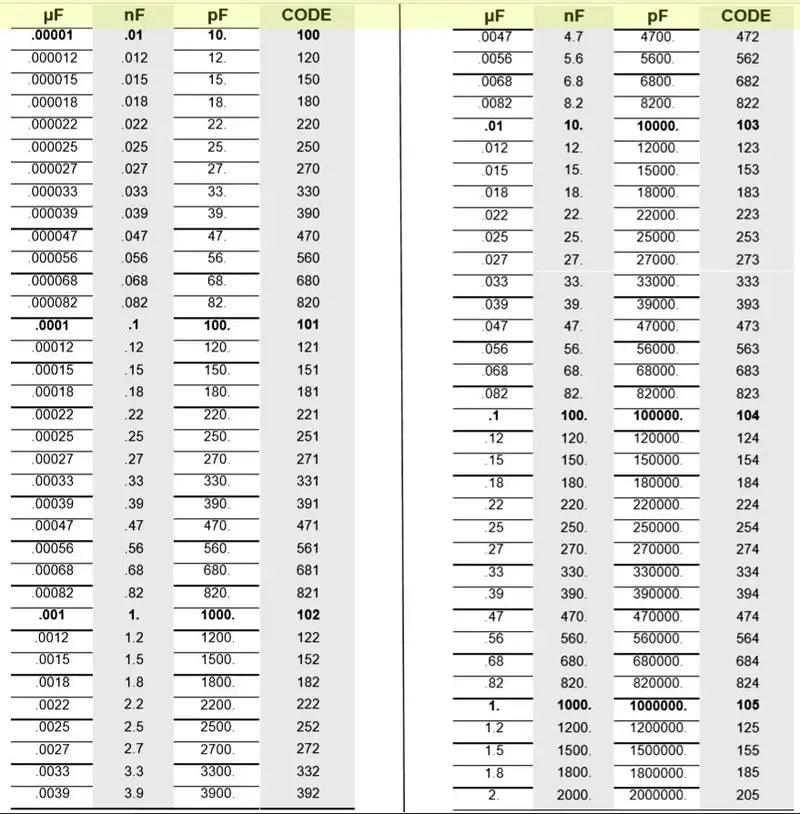
Capacitance Value: 4.7 nF
Capacitance Tolerance: ±5% (typical)
Rated Voltage: 50V DC
Capacitor Type: Ceramic Capacitor
Dielectric Type: C0G / NP0 (typical for low-value capacitors)
Mounting Type: Through-Hole (DIP)
Polarity: Non-Polarized
Operating Temperature Range: -55°C to +125°C
Body Material: Ceramic

Additional Resources

FAQ

1. What is a capacitor?

A capacitor is an electronic component that stores electrical energy in the form of an electric field. It consists of two conductive plates separated by an insulating material called a dielectric.

2. What are the common types of capacitors?

Capacitors come in various types, including ceramic, electrolytic, tantalum, film, and supercapacitors. Each type is designed for specific applications based on characteristics like capacitance value, voltage rating, and stability.

3. How is capacitance value measured?

Capacitance is measured in Farads (F). In practical circuits, smaller units are commonly used such as microfarads (µF), nanofarads (nF), and picofarads (pF).

4. What is the importance of voltage rating in a capacitor?

The voltage rating indicates the maximum voltage a capacitor can safely handle. Exceeding this limit can damage the capacitor or cause it to fail.

5. Where are capacitors commonly used?

Capacitors are widely used in electronic circuits for filtering, energy storage, signal coupling/decoupling, timing applications, and noise suppression.

View full product details
Capacitors are essential electronic components widely used in electrical and electronic circuits for storing and releasing electrical energy in the form of an electric field. They consist of two conductive plates separated by an insulating material known as a dielectric, which can vary depending on the application.
Excellent Transient Response, Variety of Dielectric Properties, High Volumetric Efficiency, and Long Service Life.
Ceramic Capacitor
(Non-Polarized)
104
Non-polarized capacitors can be inserted in either direction. The markings often indicate value and tolerance.
Electrolytic Capacitor
(Polarized)
47µF 25V
Polarized capacitors must be installed correctly, with the longer lead usually being positive.
Film Capacitor
(Non-Polarized)
223J
Higher precision film capacitors often use different marking codes for value and tolerance.

Capacitor Code Craze

Numeric Code Significance Tolerance Code Dielectric Type
10 10 x Multiplier (next digit) J ±5% NP0 Low ESR, Stable
47 47 x Multiplier K ±10% X7R General Purpose
23 23 x Multiplier L ±15% XXR General Purpose
5 14 x Multiplier L ±10% XP3 Glass, Stable
6 6 x Multiplier M ±10% XFR Glava, Stable
7 7 x Multiplier N ±10% XF8 Firm, Stable
8 20 x Multiplier O ±20% XP6 Carm, Stable
9 1,000 x Multiplier M ±20% --
H
F→±1%
I
F→±1%
J
J→±5%
K
K→±10%
M
M→±20%
Applications:
  • For energy storage and release (e.g., flash),
  • For signal filtering and decoupling,
  • For AC coupling between stages,
  • For timing circuits (with resistors),
  • To set oscillator frequencies,
  • To stabilize power supply voltages,
  • In motor start/run applications,
  • In automotive electronic systems,
  • In medical equipment filters,
  • In telecommunications signals.