Skip to product information
1 of 4

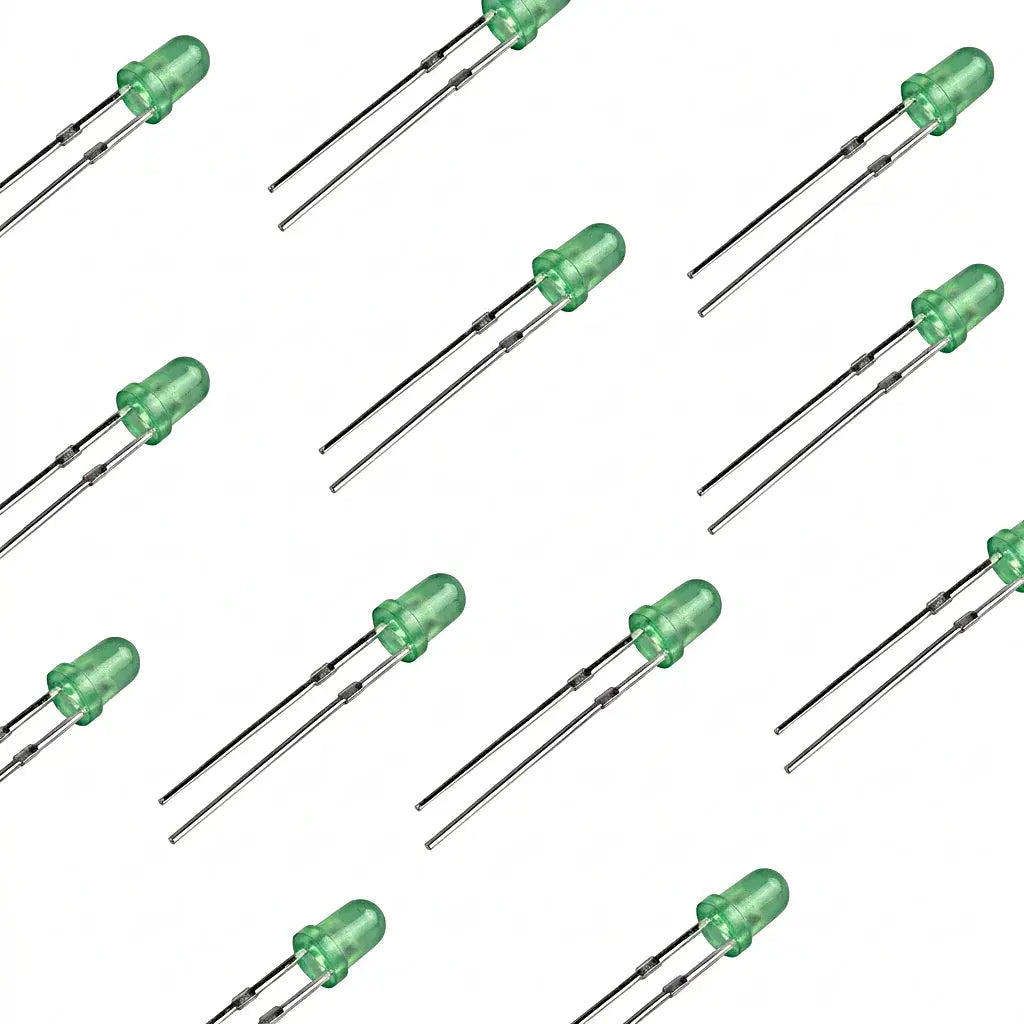
5mm Green LED (Pack of 2)

SKU: RI6422B9MS
A Green light-emitting diode (LED) is a semiconductor light source. LED's are used as indicator lamps in many devices and are increasingly used for other lighting. It looks like a white led and illuminate's blue light. When a light-emitting diode is switched on, electrons are able to recombine with holes within the device, releasing energy in the form of photons....
Regular price Rs. 5.50
Regular price Rs. 9.00 Sale price Rs. 5.50
Save Rs. 3.50
Sold out
Tax included. Shipping calculated at checkout.

Shipping & Returns

Orders placed before 3 PM IST will be shipped on the same day (excluding Sundays and Public holidays) through our shipping partners. In rare cases, the pickup may get delayed during Public holidays / Bandh / Environmental disturbances.

Specifications

Specifications:

Product Type: Light Emitting Diode (LED)
LED Colour: Green
LED Size: 5mm
Optical Component: LED
Lens Type: Diffused
Dimensions: 3 × 2 × 1 cm
Weight: 5 grams

Additional Resources

FAQ

1. What is the size of this LED?

This LED has a 5mm diameter, which is one of the most commonly used sizes in electronics. It is ideal for indicator lights, breadboard circuits, and DIY electronics projects.

2. What voltage is required to operate the 5mm Green LED?

The typical forward voltage of a green LED is around 2V to 3V, and it usually operates at a forward current of about 20mA. A current-limiting resistor should always be used to prevent damage.

3. What are the common uses of a 5mm Green LED?

A 5mm Green LED is widely used for status indicators, Arduino and Raspberry Pi projects, electronics prototyping, display boards, and educational experiments.

View full product details

A Green light-emitting diode (LED) is a semiconductor light source. LED's are used as indicator lamps in many devices and are increasingly used for other lighting. It looks like a white led and illuminate's blue light. When a light-emitting diode is switched on, electrons are able to recombine with holes within the device, releasing energy in the form of photons. This effect is called electroluminescence and the colour of the light (corresponding to the energy of the photon) is determined by the energy bandgap of the semiconductor.