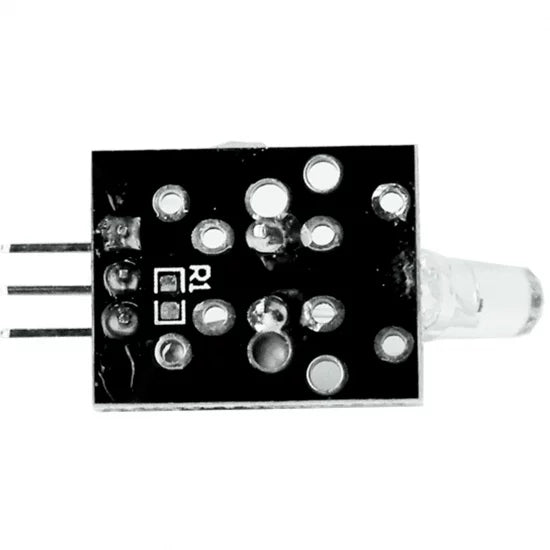
7 Color Flash Led (KY-034)

SKU: VRG6MBQMRN
★★★★
4.1 (18 reviews)
The 7 Color Flash LED is a self-flashing multicolor LED that automatically cycles through seven vibrant colors without requiring an external controller or microcontroller. The LED contains an integrated control IC that continuously changes the emitted color, creating attractive lighting effects with a simple DC power supply connection. Its low power consumption, compact size, and ease of use make it...
Regular price Rs. 19.00
Regular price Rs. 25.00 Sale price Rs. 19.00
Save Rs. 6 Incl. GST (No Hidden Charges)
Sold out
Tax included. Shipping calculated at checkout.
COD Available
Easy Return
Quality Assured
12 people are viewing this right now
Bulk Orders Available
Special Pricing for Schools, Colleges & Businesses
Contact Us
Free Delivery For All Prepaid Orders Above ₹999
Shop for ₹999 or more and get FREE delivery
across India.
FREE
View full product details
Same Day Dispatch Order before 2PM
Pan India Delivery Shipping in 24-48H
Secure Packaging Safe & Damage Free
Dedicated Support Expert Assistance

The 7 Color Flash LED is a self-flashing multicolor LED that automatically cycles through seven vibrant colors without requiring an external controller or microcontroller. The LED contains an integrated control IC that continuously changes the emitted color, creating attractive lighting effects with a simple DC power supply connection.

Its low power consumption, compact size, and ease of use make it ideal for decorative lighting, DIY electronics projects, toys, indicator lights, model making, wearable electronics, and creative lighting applications. Simply connect the LED to an appropriate power source with a current-limiting resistor, and it will automatically begin cycling through colors.

The 7 Color Flash LED is widely used by hobbyists, students, and electronics enthusiasts looking to add dynamic lighting effects to their projects.

Key Features

  • Automatically cycles through 7 colors
  • Built-in flashing and color-changing controller
  • No external programming required
  • Bright and vivid color output
  • Low power consumption
  • Simple two-pin connection
  • Compact and lightweight design
  • Smooth color transition effect
  • Long operating lifespan
  • Easy integration into electronic circuits
  • Suitable for decorative lighting
  • Reliable and stable operation
  • Ideal for hobby and DIY projects
  • Cost-effective lighting solution

Shipping & Returns

Orders placed before 3 PM IST will be shipped on the same day (excluding Sundays and Public holidays) through our shipping partners. In rare cases, the pickup may get delayed during Public holidays / Bandh / Environmental disturbances.

Specifications

Specifications:

Component Type: Auto Flashing RGB LED
LED Diameter: 5mm (Typical)
Color Output: 7 Automatic Color Changes
Operating Voltage: 3V to 5V DC
Forward Voltage: Approximately 3.0V to 4.5V
Forward Current: 20mA Maximum
Viewing Angle: Approximately 20° to 30°
Brightness: High Brightness
Flash Type: Automatic Color Cycling
Control Circuit: Built-In IC
Lead Type: Through-Hole
Polarity: Anode (+) and Cathode (-)
Response Time: Instant Start
Operating Temperature: -20°C to +70°C
Storage Temperature: -40°C to +85°C
LED Lifetime: Up to 50,000 Hours
Mounting Type: Through-Hole

Additional Resources

FAQ

1. What is a 7 Color Flash LED?

A 7 Color Flash LED is a self-contained LED that automatically cycles through seven different colors using a built-in control circuit.

2. Does the LED require a microcontroller to change colors?

No, the LED contains an internal controller that automatically handles the color-changing sequence without any external control.

3. What voltage is required to operate the LED?

The LED typically operates from a 3V to 5V DC power supply with an appropriate current-limiting resistor.

4. Can the 7 Color Flash LED be used with Arduino projects?

Yes, it can be used as a visual indicator or decorative lighting element in Arduino, ESP32, and other electronics projects.

5. How many wires are required to use the LED?

Only two connections are required: the anode (positive) and cathode (negative), making it very easy to use in electronic circuits.

You May Also Like