
Couldn't load pickup availability
Orders placed before 3 PM IST will be shipped on the same day (excluding Sundays and Public holidays) through our shipping partners. In rare cases, the pickup may get delayed during Public holidays / Bandh / Environmental disturbances.


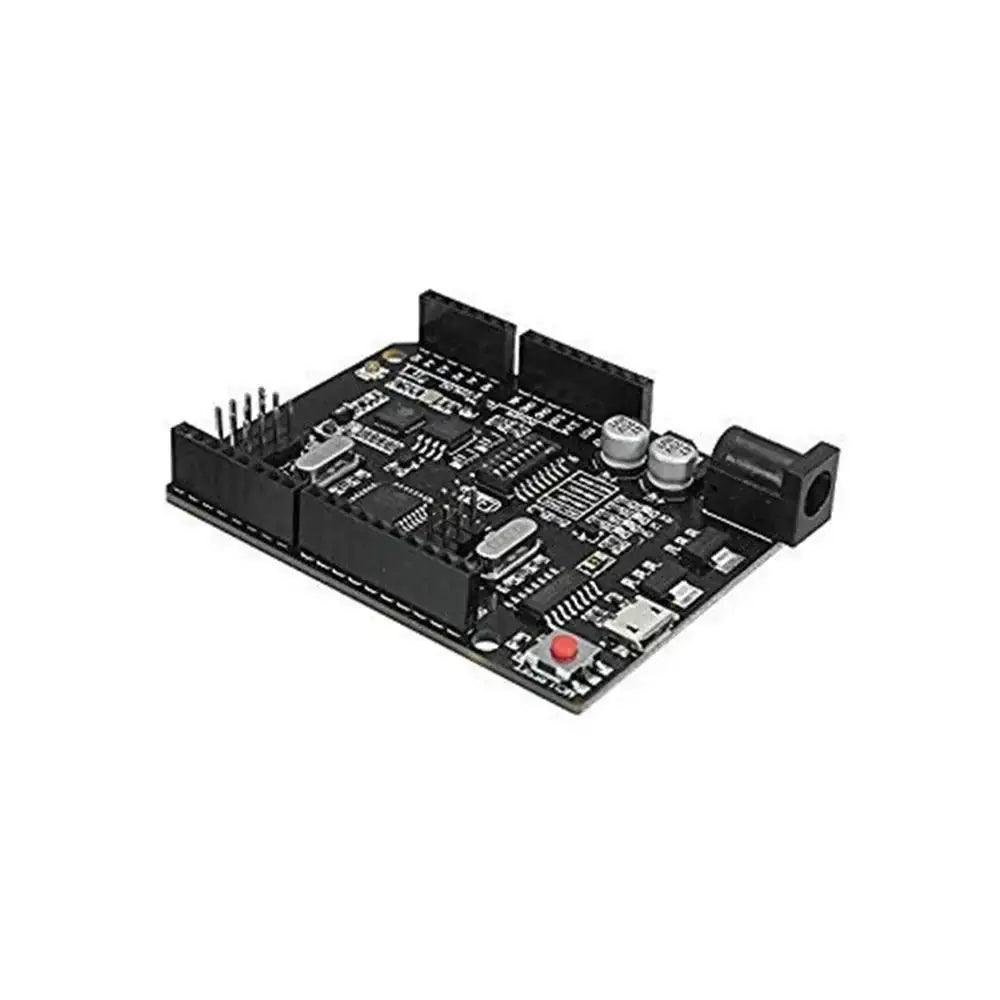
The UNO + WiFi R3 (CH340G) is an advanced, fully integrated development board that combines the classic ATmega328-based Arduino Uno R3 with the powerful ESP8266 WiFi module on a single PCB. In addition to these two core components, the board includes 8Mb of flash memory, making it a compact yet highly capable solution for both traditional embedded projects and modern IoT applications.
This hybrid design allows the ATmega328 microcontroller and the ESP8266 WiFi chip to operate either independently or together, depending on your project requirements. Each module has its own dedicated pinout headers, offering flexibility in hardware connections and making it easy to interface with sensors, displays, relays, and other peripherals.
The board features the CH340G USB-to-Serial converter, enabling seamless communication between the board and a computer. This makes uploading sketches to the ATmega328 or updating firmware on the ESP8266 straightforward using the Arduino IDE or NodeMCU environment. With proper configuration, users can develop and upload code to either processor without needing additional hardware programmers.
Functionally, the UNO + WiFi R3 can be considered a modern and enhanced version of the traditional Arduino UNO R3. It retains the familiar layout and usability of the classic board while adding built-in WiFi capability. A built-in DIP switch allows users to configure different communication modes, such as connecting the USB interface to the ATmega328, the ESP8266, or enabling serial communication between both chips. This flexible switching system simplifies development and debugging.
The board also includes onboard indicator LEDs and clearly labeled headers, making it convenient to connect external modules and monitor system activity. Its all-in-one design reduces wiring complexity and eliminates the need for stacking separate WiFi shields.
Overall, the UNO + WiFi R3 (CH340G) is an excellent choice for developers who want the reliability of the Arduino Uno platform combined with integrated WiFi connectivity for IoT and network-enabled projects.
WiFi-based IoT projects
Home automation systems
Internet-connected smoke alarms
Incubator controllers
Wireless security alarm systems
Remote monitoring and data logging systems


