Skip to product information
1 of 4

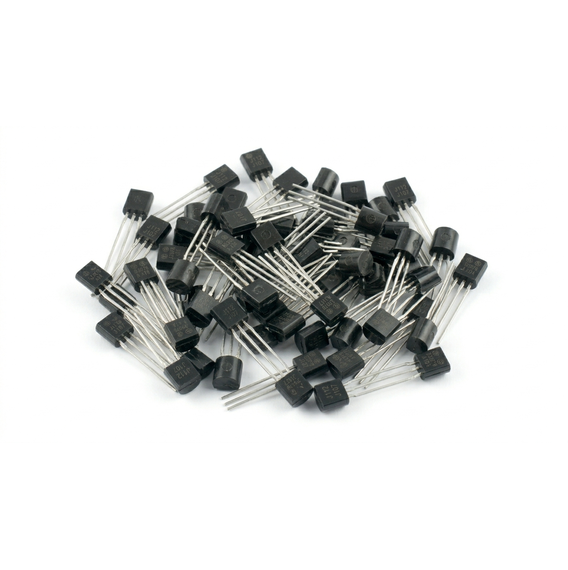
BC548 NPN Transistor (Pack of 2)

SKU: P51P0EOLX8
The BC548 Transistor is a general-purpose NPN bipolar junction transistor (BJT) widely used for low-noise amplification and switching applications. It is one of the most popular transistors in electronic circuit design due to its reliability, affordability, and excellent signal handling characteristics. The BC548 is commonly found in audio amplifiers, sensor circuits, oscillator circuits, communication equipment, and microcontroller-based projects where low-power...
Regular price Rs. 6.00
Regular price Rs. 13.00 Sale price Rs. 6.00
Save Rs. 7
Sold out
Tax included. Shipping calculated at checkout.

Shipping & Returns

Orders placed before 3 PM IST will be shipped on the same day (excluding Sundays and Public holidays) through our shipping partners. In rare cases, the pickup may get delayed during Public holidays / Bandh / Environmental disturbances.

Specifications

Specifications:

Part Number: BC548
Transistor Type: NPN Bipolar Junction Transistor
Package Type: TO-92
Collector-Emitter Voltage (VCEO): 30V
Collector-Base Voltage (VCBO): 30V
Emitter-Base Voltage (VEBO): 5V
Maximum Collector Current (IC): 100mA
Power Dissipation (PC): 500mW
DC Current Gain (hFE): 110 to 800 (depending on gain group A, B, or C)
Transition Frequency (fT): 150MHz (typical)
Mounting Type: Through-Hole
Operating Temperature Range: −55°C to +150°C

Additional Resources

FAQ

1. What is a transistor?

A transistor is a semiconductor device used to amplify electrical signals or act as an electronic switch in circuits. It is one of the fundamental building blocks of modern electronic devices.

2. What are the main types of transistors?

The two most common types of transistors are Bipolar Junction Transistors (BJTs) and Field Effect Transistors (FETs). BJTs are available as NPN and PNP types, while FETs include MOSFETs and JFETs.

3. How does a transistor work as a switch?

A transistor works as a switch by controlling the flow of current between its terminals. A small input signal can turn a larger current on or off, making transistors useful in digital and control circuits.

4. Where are transistors commonly used?

Transistors are widely used in amplifiers, power supplies, microcontrollers, communication devices, computers, motor drivers, and countless other electronic applications.

5. Why are transistors important in electronics?

Transistors enable signal amplification, switching, voltage regulation, and digital logic operations. Their reliability, small size, and low power consumption have made modern electronics possible.

View full product details

The BC548 Transistor is a general-purpose NPN bipolar junction transistor (BJT) widely used for low-noise amplification and switching applications. It is one of the most popular transistors in electronic circuit design due to its reliability, affordability, and excellent signal handling characteristics. The BC548 is commonly found in audio amplifiers, sensor circuits, oscillator circuits, communication equipment, and microcontroller-based projects where low-power switching and signal amplification are required.

Housed in the compact TO-92 package, the BC548 offers easy through-hole mounting and dependable performance in both analog and digital electronic circuits. Its low-noise operation and high current gain make it particularly suitable for audio and signal-processing applications.

Key Features

  • NPN Silicon Bipolar Junction Transistor (BJT)
  • General-purpose switching and amplification transistor
  • Low-noise performance for signal applications
  • Collector-Emitter Voltage (VCEO) up to 30V
  • Collector current capability up to 100mA
  • High DC current gain (hFE)
  • Fast switching performance
  • Compact TO-92 through-hole package
  • Reliable operation and long service life
  • Cost-effective and widely available

Applications

  • Signal amplification circuits
  • Audio preamplifier stages
  • General-purpose switching circuits
  • Oscillator and timing circuits
  • Sensor interface circuits
  • Microcontroller and Arduino projects
  • Communication equipment
  • Consumer electronics
  • Educational and DIY electronics projects
  • Control and automation systems