Skip to product information
1 of 2

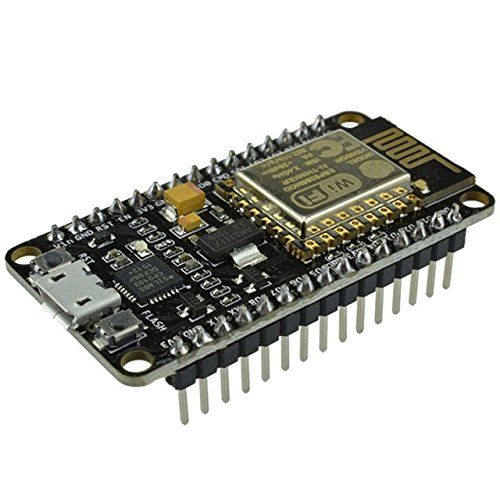
ESP8266 NodeMCU CP2102 WiFi Development Board

SKU: 8EVFRCBACV
The ESP8266 NodeMCU CP2102 WiFi Development Board is a powerful and cost-effective IoT development platform based on the ESP8266 WiFi microcontroller. It combines a high-performance 32-bit processor, built-in WiFi connectivity, GPIO interfaces, and a CP2102 USB-to-UART converter, making it an ideal choice for Internet of Things (IoT), home automation, wireless monitoring, and embedded system projects. The board is designed for...
Regular price Rs. 349.00
Regular price Rs. 399.00 Sale price Rs. 349.00
Save Rs. 50
Sold out
Tax included. Shipping calculated at checkout.

Shipping & Returns

Orders placed before 3 PM IST will be shipped on the same day (excluding Sundays and Public holidays) through our shipping partners. In rare cases, the pickup may get delayed during Public holidays / Bandh / Environmental disturbances.

Specifications

Specifications:

Microcontroller: ESP8266EX
USB Interface: CP2102 USB-to-UART Converter
Operating Voltage: 3.3V
Input Voltage: 5V via Micro USB
WiFi Standard: IEEE 802.11 b/g/n
WiFi Frequency: 2.4GHz
Flash Memory: Typically 4MB
Digital I/O Pins: Multiple GPIO Pins
Analog Input: 1 ADC Channel (10-bit)
Communication Protocols: UART, SPI, I2C, PWM
Clock Speed: Up to 80MHz / 160MHz
USB Connector: Micro USB
Programming Support: Arduino IDE, Lua, MicroPython
Wireless Security: WEP, WPA, WPA2

FAQ

1. What is the ESP8266 NodeMCU CP2102 WiFi Development Board?

The ESP8266 NodeMCU CP2102 is a WiFi-enabled development board based on the ESP8266 microcontroller. It features built-in WiFi connectivity, GPIO pins, and a CP2102 USB-to-Serial converter, making it ideal for IoT, automation, and wireless communication projects.

2. What is the role of the CP2102 chip on the NodeMCU board?

The CP2102 chip acts as a USB-to-UART converter, allowing the ESP8266 NodeMCU to communicate with a computer via a USB connection. It simplifies programming and serial debugging without requiring additional hardware.

3. What programming environments support the ESP8266 NodeMCU?

The ESP8266 NodeMCU can be programmed using the Arduino IDE, PlatformIO, Lua firmware, MicroPython, and other development environments. The Arduino IDE is the most popular choice due to its simplicity and extensive library support.

4.What are the common applications of the ESP8266 NodeMCU?

The board is widely used in IoT projects, home automation systems, smart sensors, wireless monitoring, web servers, weather stations, remote control systems, and cloud-connected devices thanks to its built-in WiFi capability.

5. What are the advantages of using the ESP8266 NodeMCU CP2102 Development Board?

The ESP8266 NodeMCU offers low cost, built-in WiFi, easy USB programming, multiple GPIO pins, support for various communication protocols, and compatibility with a large ecosystem of libraries, making it an excellent platform for beginners and professionals alike.

View full product details

The ESP8266 NodeMCU CP2102 WiFi Development Board is a powerful and cost-effective IoT development platform based on the ESP8266 WiFi microcontroller. It combines a high-performance 32-bit processor, built-in WiFi connectivity, GPIO interfaces, and a CP2102 USB-to-UART converter, making it an ideal choice for Internet of Things (IoT), home automation, wireless monitoring, and embedded system projects.

The board is designed for easy programming through the Arduino IDE, MicroPython, Lua, and other development environments. Its integrated USB interface and onboard voltage regulator allow users to quickly develop and deploy wireless applications without additional hardware.

Features

  • Based on the ESP8266 WiFi SoC
  • Integrated CP2102 USB-to-Serial converter
  • Built-in 2.4GHz WiFi connectivity
  • Supports Arduino IDE, MicroPython, and Lua programming
  • Multiple GPIO pins for sensor and module interfacing