Skip to product information
1 of 3

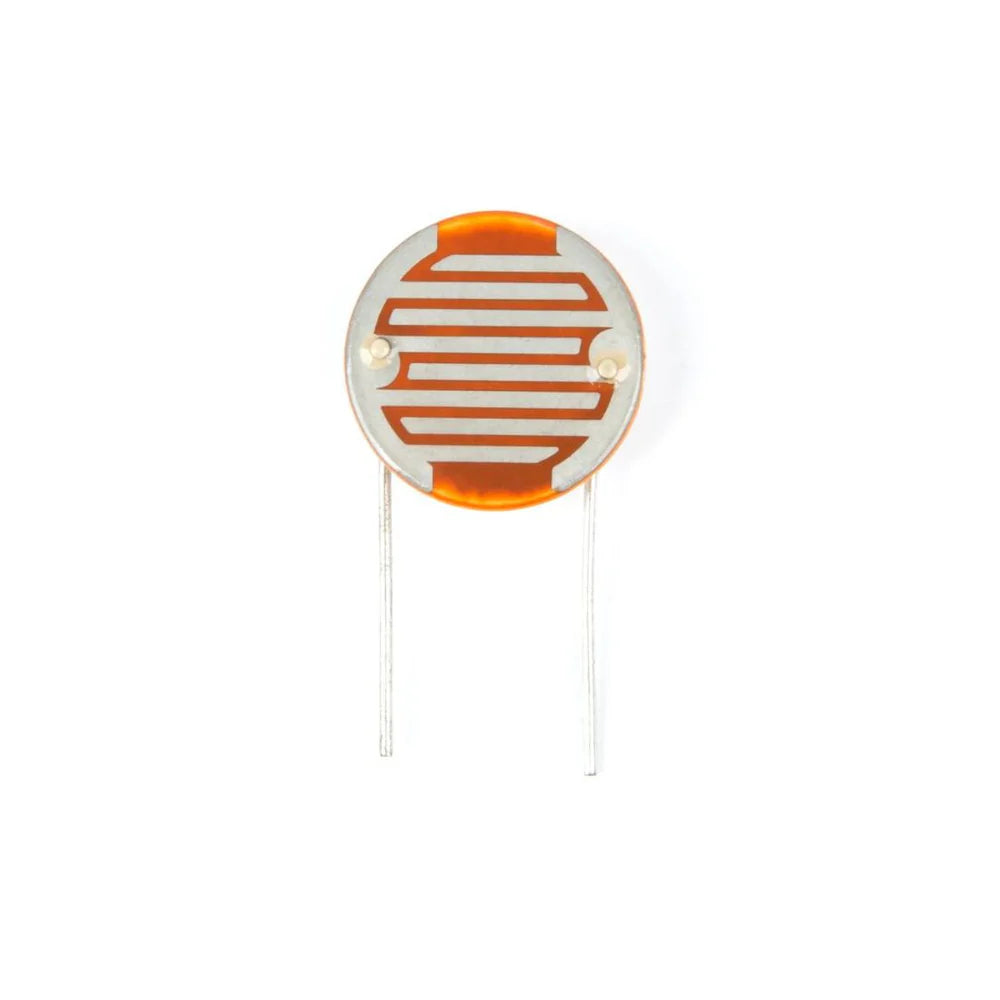
LDR (Light Dependent Resistor) Photoresistor 8mm

SKU: 07K0EDS32V
The 8mm LDR (Light Dependent Resistor), also known as a photoresistor, is a light-sensitive electronic component whose resistance changes according to the intensity of incident light. When exposed to brighter light, the resistance decreases, while in darkness or low-light conditions, the resistance increases significantly. Featuring a compact 8mm photosensitive surface, this LDR is widely used in automatic lighting systems, light...
Regular price Rs. 27.00
Regular price Rs. 30.00 Sale price Rs. 27.00
Save Rs. 3
Sold out
Tax included. Shipping calculated at checkout.

Shipping & Returns

Orders placed before 3 PM IST will be shipped on the same day (excluding Sundays and Public holidays) through our shipping partners. In rare cases, the pickup may get delayed during Public holidays / Bandh / Environmental disturbances.

Specifications

Specifications:

Product Type: Light Dependent Resistor (LDR)
Sensor Type: Photoresistor
Diameter: 8mm
Mounting Type: Through-Hole
Spectral Peak Wavelength: Approximately 540nm
Light Resistance (10 Lux): 10KΩ – 20KΩ Typical
Dark Resistance: 0.5MΩ – 2MΩ Typical
Maximum Voltage: 150V DC
Maximum Power Dissipation: 100mW
Response Time:
Rise Time: ≤ 30ms
Fall Time: ≤ 30ms
Operating Temperature: -30°C to +70°C
Lead Length: Approximately 20mm – 30mm
Terminal Type: Radial Leads
Body Material: Epoxy Resin Encapsulation
Weight: Approximately 1g

Additional Resources

FAQ

1. What is the 8mm LDR Photoresistor used for?

The 8mm LDR is used to detect ambient light levels in applications such as automatic lighting systems, solar lights, smart home devices, and light-controlled circuits.

2. How does the LDR change its resistance?

The resistance decreases as light intensity increases and increases when light intensity decreases or darkness is present.

3. Can the 8mm LDR be connected to Arduino and ESP32 boards?

Yes, the LDR can be easily connected to Arduino, ESP32, STM32, Raspberry Pi Pico, and other microcontrollers using a voltage divider circuit.

4. What is the typical resistance of the LDR in darkness?

The dark resistance is typically between 0.5MΩ and 2MΩ, depending on the sensor and environmental conditions.

5. What is the difference between an 8mm and 12mm LDR?

The primary difference is the photosensitive surface size. A 12mm LDR generally provides a larger sensing area and slightly higher light sensitivity, while the 8mm version is more compact and suitable for space-constrained applications.

View full product details

The 8mm LDR (Light Dependent Resistor), also known as a photoresistor, is a light-sensitive electronic component whose resistance changes according to the intensity of incident light. When exposed to brighter light, the resistance decreases, while in darkness or low-light conditions, the resistance increases significantly.

Featuring a compact 8mm photosensitive surface, this LDR is widely used in automatic lighting systems, light detection circuits, solar-powered devices, brightness sensing applications, and microcontroller-based projects. Its simple operation and low cost make it one of the most popular sensors for ambient light detection.

The sensor can be easily interfaced with Arduino, ESP32, STM32, Raspberry Pi Pico, and other development boards using a simple voltage divider circuit, making it ideal for educational, DIY, and industrial automation applications.

Key Features

  • Light-sensitive resistor (Photoresistor)
  • Compact 8mm sensing surface
  • Resistance varies according to light intensity
  • High sensitivity to visible light
  • Simple analog sensing operation
  • Low power consumption
  • Fast response to changing light conditions
  • Through-hole mounting design
  • Easy integration with microcontrollers
  • Long service life
  • Cost-effective light sensing solution
  • Suitable for indoor and outdoor applications
  • Reliable and stable performance
  • Ideal for automation and sensing projects