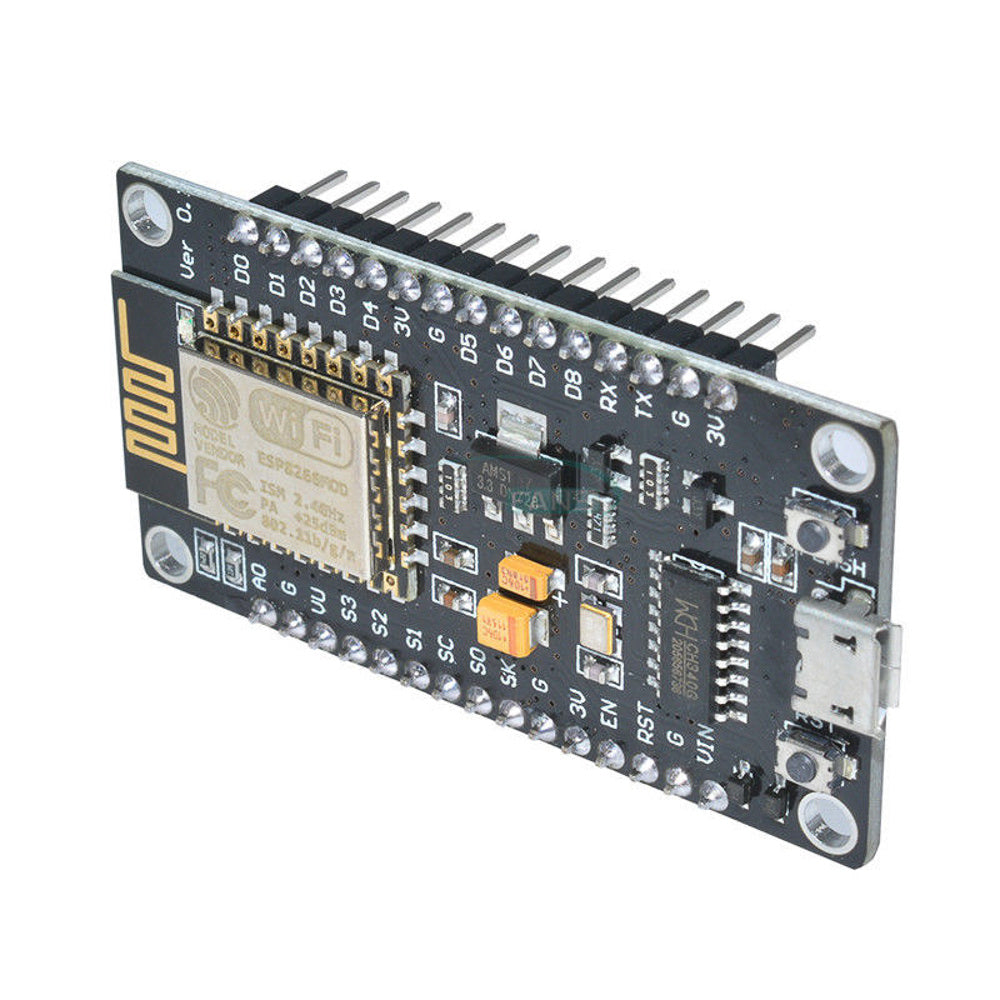
NodeMCU ESP8266 CH340 Wi-Fi Module

★★★★
4.5 (82 reviews)
The NodeMCU ESP8266 CH340 Wi-Fi Module is a powerful and affordable development board designed for Internet of Things (IoT), home automation, and wireless communication projects. Based on the ESP8266EX Wi-Fi microcontroller, it combines processing capabilities, built-in Wi-Fi connectivity, and a CH340 USB-to-Serial converter in a compact and easy-to-use platform. The board is widely used by hobbyists, students, makers, and professional...
Regular price Rs. 259.00
Regular price Rs. 289.00 Sale price Rs. 259.00
Save Rs. 30 Incl. GST (No Hidden Charges)
Sold out
Tax included. Shipping calculated at checkout.
COD Available
Easy Return
Quality Assured
12 people are viewing this right now
Bulk Orders Available
Special Pricing for Schools, Colleges & Businesses
Contact Us
Free Delivery For All Prepaid Orders Above ₹999
Shop for ₹999 or more and get FREE delivery
across India.
FREE
View full product details
Same Day Dispatch Order before 2PM
Pan India Delivery Shipping in 24-48H
Secure Packaging Safe & Damage Free
Dedicated Support Expert Assistance

The NodeMCU ESP8266 CH340 Wi-Fi Module is a powerful and affordable development board designed for Internet of Things (IoT), home automation, and wireless communication projects. Based on the ESP8266EX Wi-Fi microcontroller, it combines processing capabilities, built-in Wi-Fi connectivity, and a CH340 USB-to-Serial converter in a compact and easy-to-use platform.

The board is widely used by hobbyists, students, makers, and professional developers for creating connected devices that can communicate over local networks or the internet. Its compatibility with the Arduino IDE, MicroPython, and Lua makes it suitable for both beginners and advanced users.

Features

  • Based on the ESP8266EX Wi-Fi System-on-Chip (SoC)
  • Integrated CH340 USB-to-UART converter
  • Built-in 2.4GHz Wi-Fi connectivity
  • Supports Arduino IDE, MicroPython, and Lua programming
  • Multiple GPIO pins for sensor and module interfacing

Shipping & Returns

Orders placed before 3 PM IST will be shipped on the same day (excluding Sundays and Public holidays) through our shipping partners. In rare cases, the pickup may get delayed during Public holidays / Bandh / Environmental disturbances.

Specifications

Specifications:

Microcontroller: ESP8266EX
USB Interface: CH340 USB-to-UART Converter
Operating Voltage: 3.3V
Input Voltage: 5V via Micro USB
Wi-Fi Standard: IEEE 802.11 b/g/n
Frequency Band: 2.4GHz
Flash Memory: Typically 4MB
Digital I/O Pins: Multiple GPIO Pins
Analog Input: 1 ADC Channel
Clock Frequency: Up to 80MHz / 160MHz
Communication Interfaces: UART, SPI, I2C, PWM
USB Connector: Micro USB
Programming Support: Arduino IDE, MicroPython, Lua
Wireless Security: WEP, WPA, WPA2

FAQ

1. What is the NodeMCU ESP8266 CH340 Wi-Fi Module?

The NodeMCU ESP8266 CH340 Wi-Fi Module is a development board based on the ESP8266 microcontroller with built-in Wi-Fi capabilities. It features the CH340 USB-to-Serial converter, allowing easy programming and communication with a computer through a USB connection.

2. What is the function of the CH340 chip on the NodeMCU board?

The CH340 chip acts as a USB-to-UART converter, enabling the computer to communicate with the ESP8266 microcontroller. It allows users to upload code, monitor serial data, and debug applications through a standard USB cable.

3. What programming platforms support the NodeMCU ESP8266 CH340?

The NodeMCU ESP8266 CH340 can be programmed using the Arduino IDE, PlatformIO, MicroPython, and Lua firmware. The Arduino IDE is widely used due to its extensive library support and beginner-friendly environment.

4. What are the common applications of the NodeMCU ESP8266 CH340 Wi-Fi Module?

This module is commonly used in IoT devices, smart home automation, wireless sensor networks, weather stations, remote monitoring systems, web servers, and cloud-connected applications that require Wi-Fi connectivity.

5. Why is the NodeMCU ESP8266 CH340 popular among makers and developers?

The NodeMCU ESP8266 CH340 is popular because it combines built-in Wi-Fi, low cost, easy USB programming, multiple GPIO pins, and strong community support. It enables rapid development of connected devices without requiring additional wireless modules.

You May Also Like