Skip to product information
1 of 3

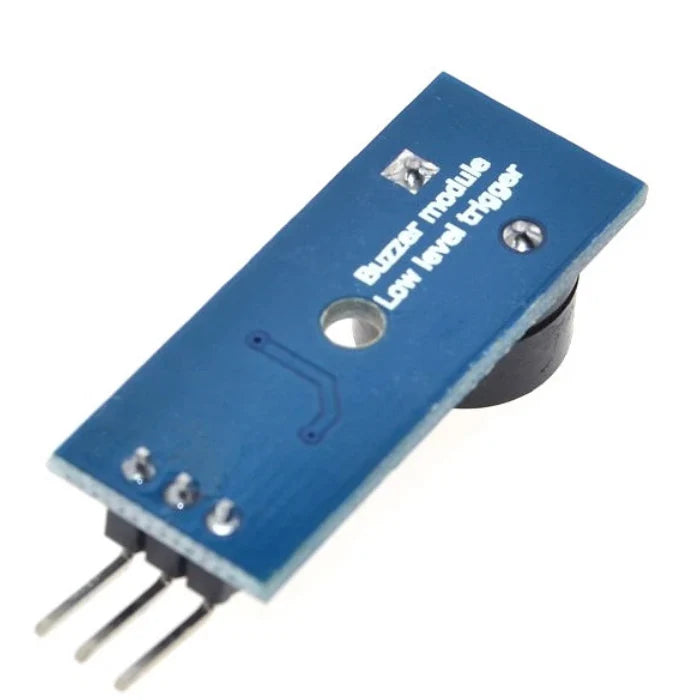
Passive Buzzer Module with PCB

SKU: S6VARLYACP
The Passive Buzzer Module with PCB is a compact sound-generating module designed for use with microcontrollers and embedded systems. Unlike active buzzers, a passive buzzer requires an external frequency signal to produce sound, allowing users to generate different tones, melodies, and alarm sounds. Mounted on a PCB for easy integration, this module is widely used in Arduino, ESP32, Raspberry Pi,...
Regular price Rs. 42.00
Regular price Rs. 45.00 Sale price Rs. 42.00
Save Rs. 3
Sold out
Tax included. Shipping calculated at checkout.

Shipping & Returns

Orders placed before 3 PM IST will be shipped on the same day (excluding Sundays and Public holidays) through our shipping partners. In rare cases, the pickup may get delayed during Public holidays / Bandh / Environmental disturbances.

Specifications

Specifications:

Module Type: Passive Buzzer Module
Buzzer Type: Piezoelectric Passive Buzzer
Operating Voltage: 3.3V – 5V DC
Operating Current: Typically less than 30mA
Control Method: PWM (Pulse Width Modulation) or Frequency Signal
Interface: Digital Signal Input
Sound Output: Frequency-dependent tone generation
Mounting Type: PCB Mounted
Compatibility: Arduino, ESP32, Raspberry Pi, STM32, AVR, PIC, and other microcontrollers
Operating Temperature: -20°C to +70°C
Dimensions: Compact PCB Module suitable for embedded applications
Application Areas: Alarms, notifications, robotics, educational projects, IoT devices, and sound indication systems
Power Consumption: Low power operation for battery-powered projects
Installation: Easy 3-pin connection (VCC, GND, Signal) for quick integration into electronic circuits

Additional Resources

FAQ

1. What is a Passive Buzzer Module with PCB?

A Passive Buzzer Module with PCB is an electronic sound-generating module that uses a passive buzzer mounted on a printed circuit board. Unlike active buzzers, it requires an external square-wave signal from a microcontroller such as Arduino, ESP32, or Raspberry Pi to produce sound. This allows the generation of different tones, melodies, and alarms.

2. How is a passive buzzer different from an active buzzer?

A passive buzzer cannot generate sound by simply applying DC voltage. It requires a PWM (Pulse Width Modulation) or frequency signal to operate. An active buzzer contains an internal oscillator and produces a fixed sound when powered, whereas a passive buzzer offers greater flexibility for creating various tones and musical notes.

3. What are the common applications of a Passive Buzzer Module?

Passive buzzer modules are widely used in:

  • Arduino and microcontroller projects
  • Security and alarm systems
  • Electronic toys
  • Sound notification devices
  • Educational electronics experiments
  • Melody and music-playing circuits

4. Can a Passive Buzzer Module be connected directly to an Arduino?

Yes. The module can be connected directly to an Arduino digital output pin. By using Arduino functions such as tone(), users can generate different frequencies, melodies, and sound effects through the passive buzzer.

5. What are the advantages of using a Passive Buzzer Module with PCB?

The main advantages include:

  • Ability to generate multiple tones and melodies
  • Easy interfacing with microcontrollers
  • Compact PCB-mounted design
  • Low power consumption
  • Suitable for educational and DIY electronics projects
  • Reliable and long-lasting performance without complex circuitry
View full product details

The Passive Buzzer Module with PCB is a compact sound-generating module designed for use with microcontrollers and embedded systems. Unlike active buzzers, a passive buzzer requires an external frequency signal to produce sound, allowing users to generate different tones, melodies, and alarm sounds. Mounted on a PCB for easy integration, this module is widely used in Arduino, ESP32, Raspberry Pi, STM32, and other electronics projects.

The module is ideal for applications requiring customizable audio feedback, such as alarms, notifications, educational projects, interactive devices, and electronic instruments.

Features

  • High-quality passive piezoelectric buzzer
  • PCB-mounted design for easy wiring and installation
  • Supports generation of multiple tones and melodies
  • Compatible with Arduino, ESP32, Raspberry Pi, and other microcontrollers
  • Low power consumption
  • Compact and lightweight construction
  • Suitable for DIY, educational, and embedded applications
  • Easy interfacing through digital I/O pins
  • Reliable and long operational life