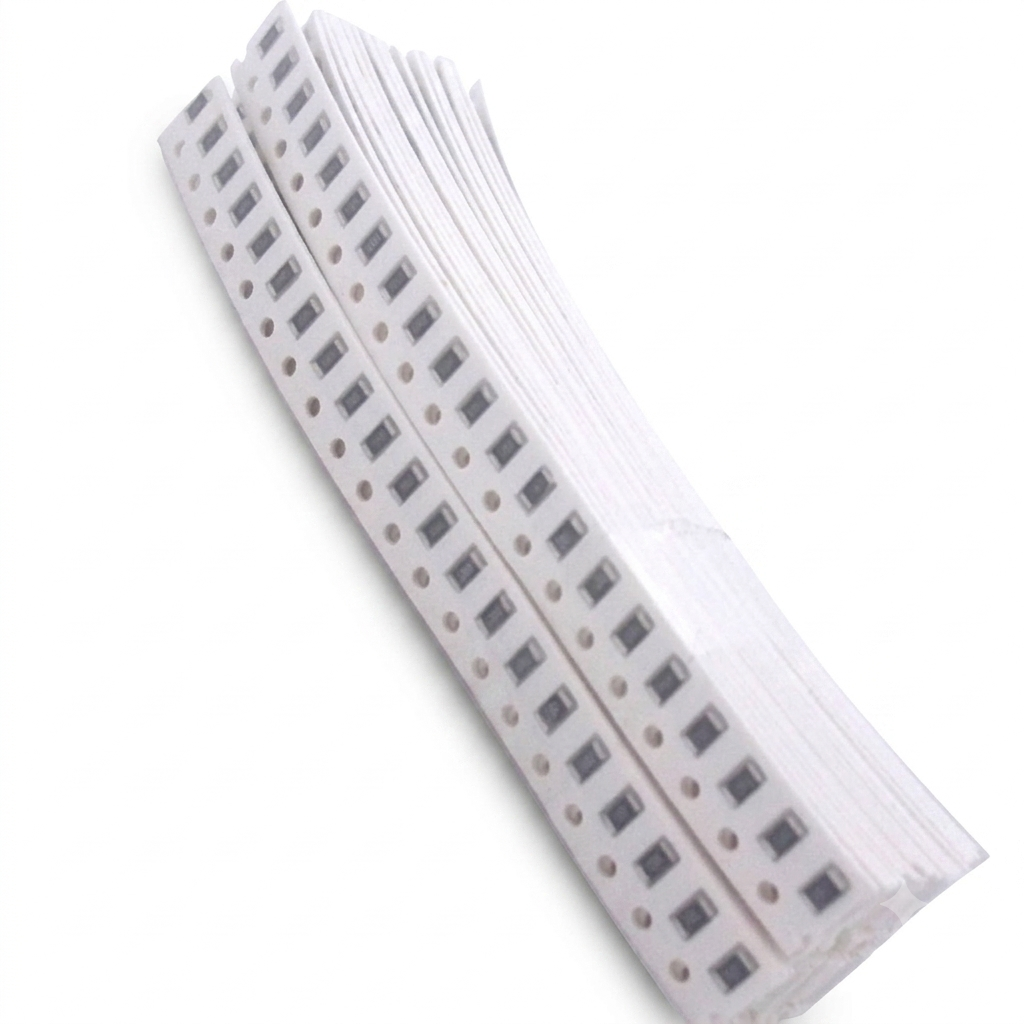
1. What is the function of a 4.7KΩ resistor in electronic circuits?
A 4.7KΩ resistor is commonly used to limit current, set biasing conditions, and create voltage divider networks. It helps control electrical flow to protect sensitive components and ensure proper circuit operation.
2. What does the 1% tolerance mean in this resistor?
The 1% tolerance indicates high precision. The actual resistance value can vary by only ±1% from 4.7KΩ, making it suitable for analog circuits, precision signal processing, and accurate voltage references.
3. What does 1/4W rating signify?
The 1/4W (0.25 watt) rating means the resistor can safely dissipate up to 0.25 watts of power without damage. It is commonly used in low to medium power electronic circuits.
4. What is the significance of SMD 1206 package size?
The 1206 SMD package refers to a surface-mount device size of approximately 3.2mm × 1.6mm. It is widely used due to its balance between ease of manual soldering and suitability for automated PCB assembly.
5. Where is a 4.7KΩ 1% SMD resistor commonly used?
It is widely used in microcontroller circuits, pull-up/pull-down networks, sensor interfacing, LED current limiting (low current applications), and signal conditioning circuits in industrial and consumer electronics.