
Couldn't load pickup availability
Orders placed before 3 PM IST will be shipped on the same day (excluding Sundays and Public holidays) through our shipping partners. In rare cases, the pickup may get delayed during Public holidays / Bandh / Environmental disturbances.


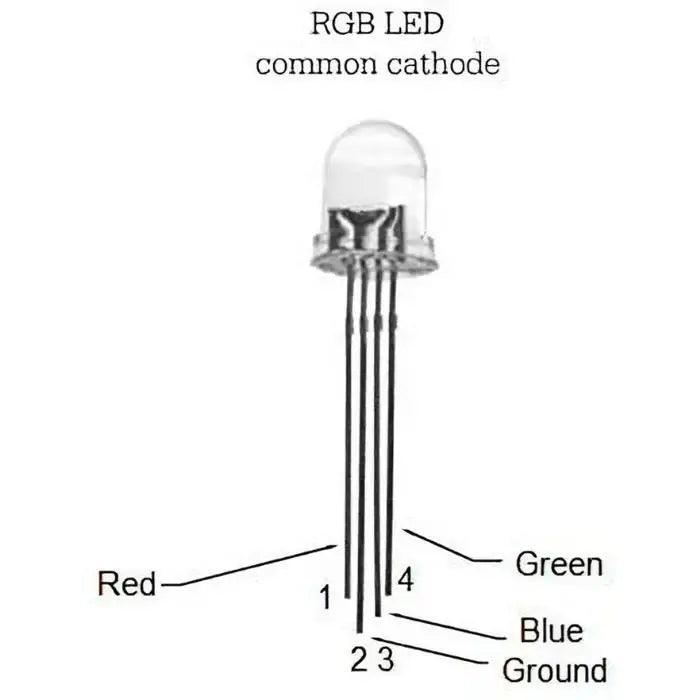
The RGB LED (Common Anode) is a versatile electronic component that combines three LEDs-Red, Green, and Blue—inside a single package. By controlling the brightness of each color individually, you can create a wide range of colors and lighting effects. This makes RGB LEDs extremely popular in Arduino projects, robotics, DIY electronics, and decorative lighting applications.
This RGB LED typically features a 4-pin configuration, consisting of one common anode (positive pin) and three separate cathodes for the red, green, and blue LEDs. In a common anode configuration, the longest pin is connected to the positive supply voltage, while each color channel is controlled through the other pins using resistors or microcontroller outputs.
The LED can produce multiple colors by mixing red, green, and blue light using PWM (Pulse Width Modulation) or simple digital control. For example, turning on all three colors at different intensities can generate colors such as purple, cyan, yellow, or white. Because the color mixing happens inside the LED package, it produces a smooth blended light rather than three separate colored points.


